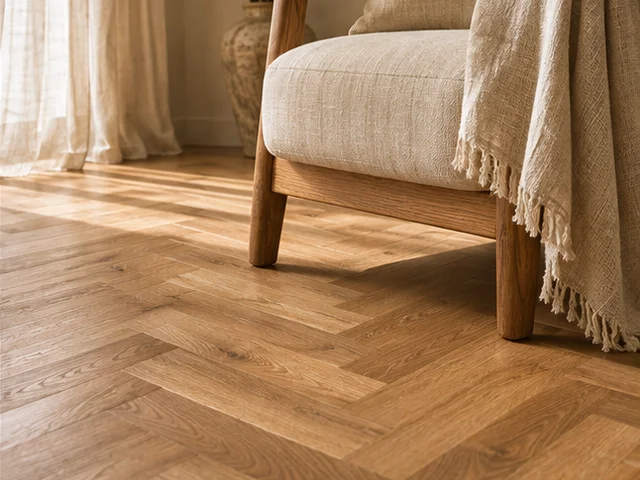
Casa Pescara
Parquet · 3 min · Published
Restoring parquet after a radiator leak in Pescara
A leak had lifted several boards. This scenario covers checks during drying, selection of replacements and inspection beside the radiator.
Illustrative scenario · A narrative example of work stages and final checks; it does not document an actual completed project.
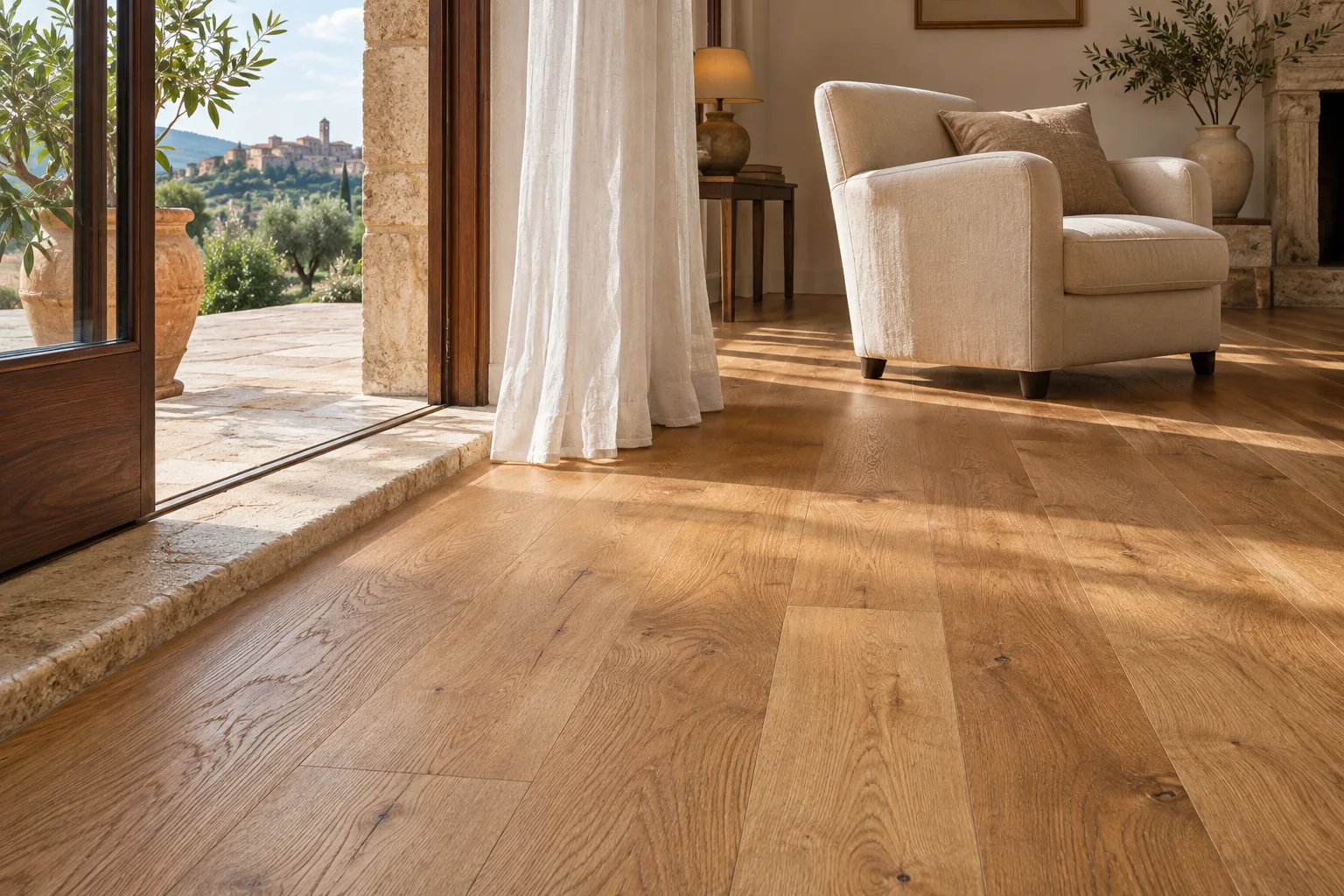
Flooring work waited for the heating repair
In this fictional scenario in Pescara, water leaked from a radiator connection onto a bedroom floor. The water had been collected, but several boards along the wall had curved. The fictional homeowner asked the flooring installer when the parquet could be restored. The first visit took place after the service installer isolated the affected heating line. The team photographed the distorted edges and the position of the connection before removing any timber. A technician wanted to establish whether damage was limited to the visible surface or extended to the substrate. The date of the floor repair therefore depended on checking the base, separately from the date on which the radiator would return to service.
The survey limited the first opening
The installer marked boards with visible distortion and checked the sections to either side. A small agreed opening showed that moisture remained under the worst affected pieces. The technician planned a series of checks in the affected area and in a reference section. Measurements were recorded with locations and dates so later readings could be taken at the same points. The shape of the board ends was noted during the opening. Some could be recovered, while the most distorted boards had edges that could no longer go back into service. Before closing the bedroom to ordinary traffic, the team kept access clear for the installer who still had to complete the heating checks.
Replacements were selected while the base was visible
Spare boards were compared with the removed pieces for dimensions, profile and finish. Samples with a similar appearance but different joints were set aside. The flooring installer made a trial with a retained board and a replacement under the bedroom lighting. The comparison used the colour of the dry floor rather than that of boards just lifted. Meanwhile the technician checked the substrate against the criteria for the flooring system being repaired. Materials were ordered before the installation date but remained packaged as directed. The installer's return was scheduled once the technician and heating specialist confirmed that their respective checks were complete.
The radiator stayed accessible during the floor repair
Once the substrate was ready, the installer prepared it and checked the edges of the retained flooring. Recovered boards went back in the positions marked during the survey, while replacements went where pieces were no longer usable. The area below the radiator was checked before the skirting was reinstated. The heating installer had marked the point needed to reach the connection, which stayed clear during finishing. After the waiting time required by the materials, the surface near the wall was checked and the room walked again. The installer retained a spare board and recorded the edge of the repaired area. Dry, sound areas stayed in place, as agreed after the first opening.
The record linked the floor and heating checks
At handover, the technician compared photographs of the repair with those from the survey. The fictional homeowner received the positions of the new boards, the finish reference and the heating repair record. The technician showed where the connection could be reached without removing the skirting. The handover notes recorded the checks on the substrate before installation, so the opening remained documented after the furniture returned. Slight differences between new and retained wood were observed while the floor was clear. The spare piece stayed with the product reference in case later repairs were needed near the wall or radiator.
Pescara · PE · Abruzzo · Distance and service-area coverage ↗
How we prepare the guides: sources and illustrative scenarios