Casa Pescara
Parquet · 3 min · Published
Adhesive residue on parquet in Montesilvano
An illustrative case about recovering part of a parquet floor after a bonded cable cover was removed.
Illustrative scenario · A narrative example of work stages and final checks; it does not document an actual completed project.

A strip where the cable cover had been
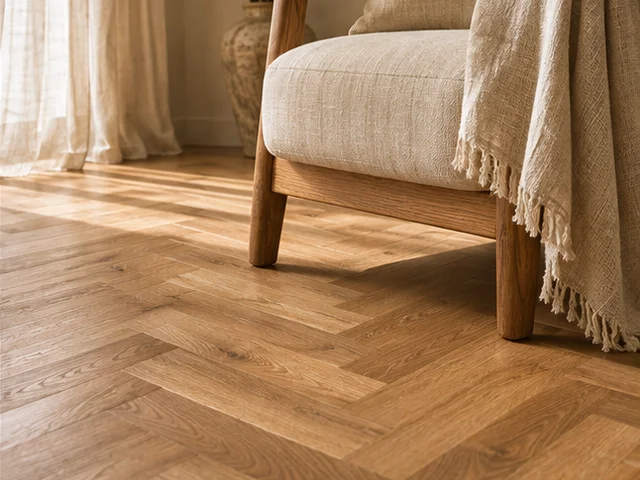
In this illustrative case, the parquet in a Montesilvano room had been laid about fifteen years earlier. A cable cover was later added near the desk. When the desk moved and the cover came off, a sticky strip appeared and began to collect dust. Small changes in gloss were visible beside it. The household considered a product left over from another project but could not establish whether it suited the floor. Before the renovation, the strip and a clean part of the same board were photographed. A piece of the cable cover and its partly legible packaging were also kept for identification.
Identifying the materials before testing
The flooring installer examined the residue and compared the surface with an area repaired earlier. The parquet documents identified the finish but gave no information about the adhesive beneath the cable cover. A fragment still attached to the cover allowed the installer to inspect its consistency away from the floor. The parquet supplier was asked which products were compatible with the finish and a small trial was agreed. It took place on an inconspicuous part of the strip, with an adjacent section left for comparison. Photographs recorded the dry surface and direction of light. Methods that might damage the finish were excluded from household trials.
Keeping the work within the observed problem
The first check showed less residue and left a short dull patch visible from the window. The installer waited for a follow-up observation under agreed conditions before considering a wider treatment. The household compared continued local cleaning with renewing the finish in a defined area. The new desk left the strip visible, so the decision did not depend on covering it with furniture. Compatible cleaning went ahead on the adhesive residue. The dull patch was recorded separately in the same lighting and left for observation during normal use of the room. This preserved a reference for any later decision about the finish.
Checking again after furnishing the room
After the work, the dry surface was viewed from the door and from the point where the side light fell. The installer checked whether the area still collected dust during the agreed observation period. The new cable was routed on the desk, clear of the floor, and furniture feet were tried before the room returned to use. The final record marked the areas treated and those left under observation. A photograph showed the exact edge of the old cable cover. The household could recognise where a later mark should be compared without confusing it with changes elsewhere on the floor.
Planning a test on adhesive residue
Keep any adhesive reference and photograph the dry mark beside an intact area. Ask the installer to identify the finish and choose a place to trial a compatible method. Compare the options after observing the result when dry and in the same light. At handover, ask for the residue, any dullness and care requirements to be recorded separately. In this example the cleaning instructions and photographs stayed together. The new cable route was recorded too, so the floor could be cleaned without another bonded fitting along the same route beside the desk.
Montesilvano · PE · Abruzzo · Distance and service-area coverage ↗
How we prepare the guides: sources and illustrative scenarios