Casa Pescara
Painting · 3 min · Published
Two-tone wall painting in Francavilla al Mare around a retained sideboard
An illustrative case in which a horizontal colour break changed after the wall was tested with the sideboard back in place.
Illustrative scenario · A narrative example of work stages and final checks; it does not document an actual completed project.
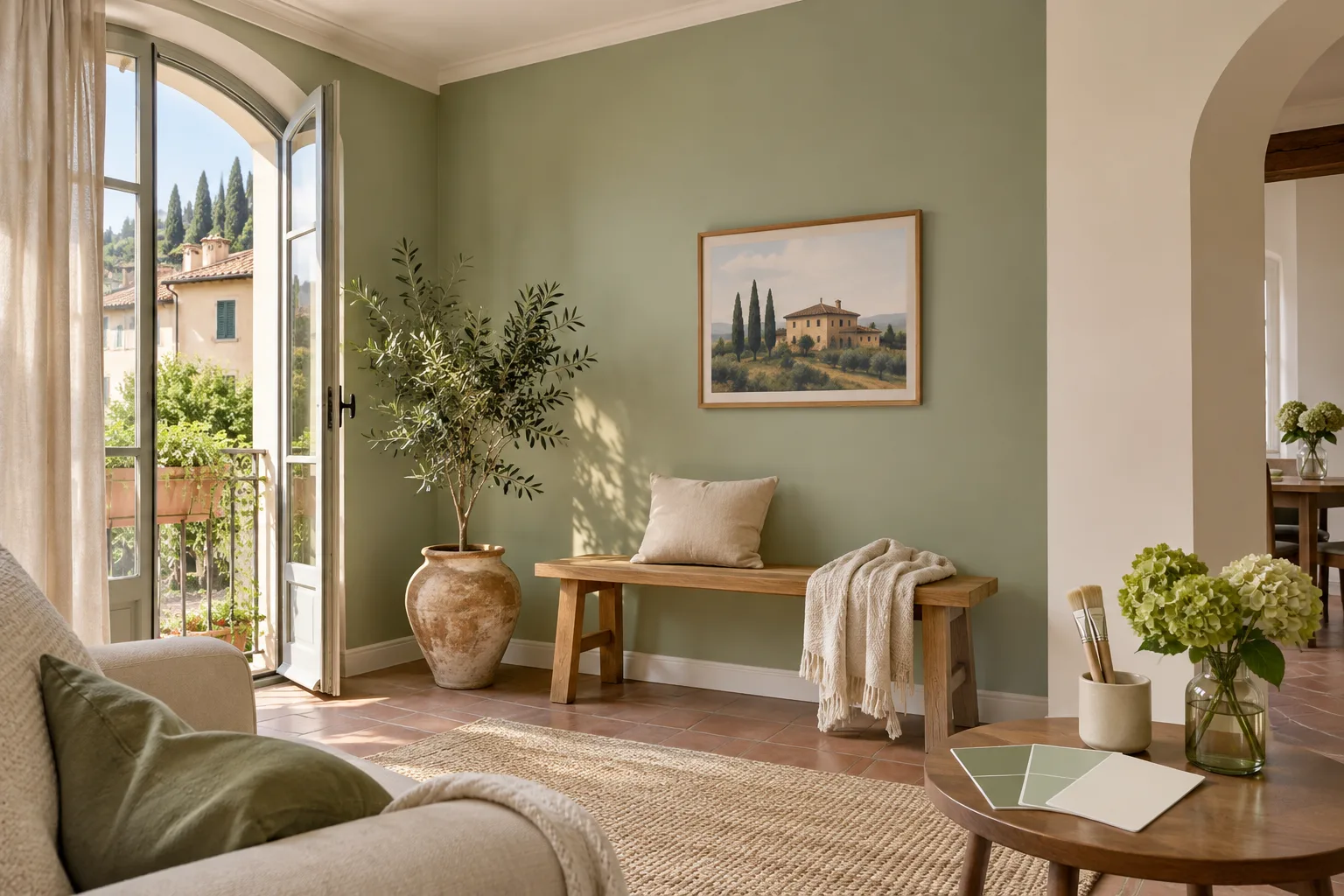
The drawing followed the wrong part of the sideboard
In this illustrative Francavilla al Mare case, the room had last been painted about fifteen years earlier. A sideboard stood against the wall due for renewal. The plan proposed two colours separated at the height of its top. At the survey, the furniture had been pulled away to examine the wall. Once back in place, its top did not match the line shown on the drawing. The difference was slight at close range but stood out from the doorway, where the sideboard appeared beside the line of the sill. The decorator paused the decision and asked to view the room with the sideboard full and the table in its normal position.
Three different lines were visible from the door
The heights of the sideboard, sill and paint break went onto the same sketch. One trial lined the paint up with the sideboard but produced a short visible stretch between the cabinet and window. A second sample moved the line higher so it could be read across the wall. From the seat, it was separate from the furniture, while from the door it continued toward a recognisable edge of the room. The team checked how it looked behind a jug normally kept on the sideboard. Afternoon light brought out the stretch by the sill, so the same arrangement was viewed again with the lamp switched on.
The boundary was chosen after a trial with the wall clear
The sideboard moved again after the positions of its feet were marked. The selected line could still be read without the cabinet. The same height would stay so the wall could retain its design if the furniture changed later. The decorator examined the previously hidden area and found two small marks along the paint boundary. That stretch was prepared before painting, and both colours were compared against the sill. The drawing established where the line ended at the corner, distinguishing the horizontal break from the junction with the adjoining room.
Handover compared the wall empty and furnished
The finish was completed before the sideboard returned. The stretch by the sill and the area behind the cabinet were checked. At handover, the furniture went back on its mark, the jug returned to the top and the wall was viewed from the doorway. The check was repeated from the seat with the lamp on. The file kept both paint colours and the height of the break against a fixed reference, with pictures of the empty and furnished wall. The corner was photographed too because that was where a difference would be easiest to spot during a future repair.
Setting the line for a two-tone wall
Try the line with the sideboard in position and again with the wall clear. Compare it from the doorway with the sill and other fixed references. Have the agreed height and paint endpoint marked before asking for surface repairs along the line. At handover, repeat the viewing in evening light and keep both colour references separately. If you move the cabinet, first check how the line reads on an empty wall. The picture taken before the sideboard returned helps identify repairs already in place. Have the colour used on the return by the sill recorded as well. That boundary may be hard to find after a curtain change.
Francavilla al Mare · CH · Abruzzo · Distance and service-area coverage ↗
How we prepare the guides: sources and illustrative scenarios