Casa Pescara
Parquet · 3 min · Published
A difference in parquet colour beneath a rug in Pescara
An illustrative case about light, finish and renovation decisions after a rug left a visible rectangle on a parquet floor.
Illustrative scenario · A narrative example of work stages and final checks; it does not document an actual completed project.
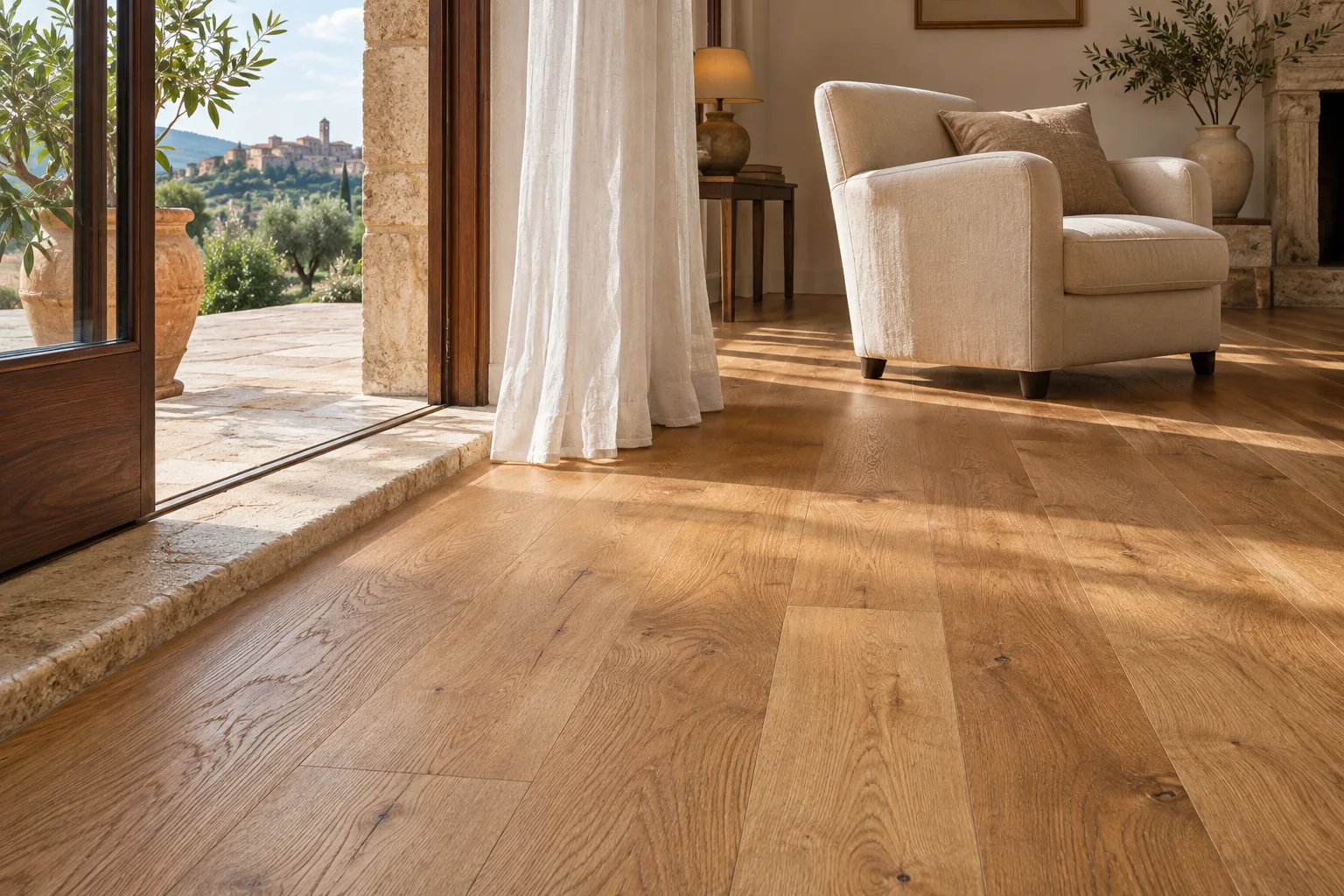
The rectangle appeared when the table moved
In this illustrative case, the parquet in a Pescara living room had been laid about fifteen years earlier. When the household moved the table, they lifted a large rug and found a sharply defined difference in colour. The rectangle was lighter than part of the surrounding floor, but a few glossy marks appeared near one side. Before asking about sanding, the household photographed the dry floor from the doorway and window. A plan showed the direction of the boards and the previous rug position. The notes distinguished the change in colour from areas where the degree of gloss also appeared different.
Separating contact marks from colour
The flooring installer looked at the parquet first in diffuse light and then with side light from the window. The rectangle was compared with an area that had stayed beneath a cabinet, and accessible areas were checked for residue without disturbing the finish. The gloss near the edge corresponded to the busiest walking route. The colour difference crossed several boards and followed the outline of the rug. Those observations did not establish how the surface would change over time. Available information on the wood flooring and its finish was collected because appearance alone did not show whether the surface could be renewed.
Comparing the choices with the new furniture layout
One proposal would have treated only the rectangle. Samples showed that a sharp boundary between two treatments could remain visible. Another option involved treating the entire room after verifying the flooring type and its condition. The household tried the new table position and kept the surface exposed for a period of observation. In the example, the decision was to retain the floor and clean only where the installer had identified surface marks that could be addressed with a compatible method. The final layout did not depend on the colour becoming uniform by a particular date. The future rug position was considered separately.
Repeat photographs under comparable conditions
After the agreed cleaning, the dry floor was photographed again from the positions marked on the plan. An image taken later made the rectangle look less visible, but the lighting had changed. Both sets were kept with separate notes on the conditions. The installer checked the treated areas for visible residue and inspected the glossy marks along the walking route. Before the table went back, its new pads were tried and the chair route was checked against the old rug edge. The care sheet distinguished the areas that had been cleaned from the visual changes recorded in the wood.
Assessing a similar colour difference
Photograph the dry floor and mark where the rug and furniture stood. Ask the installer to distinguish residue, gloss and colour before comparing cleaning, a period of observation or a wider renewal. View samples from the position where you will see the furnished floor. At handover, keep photographs taken under comparable conditions and the finish instructions, including compatible rug backing materials. The plan in this example also showed where the table feet had been tested. Any new marks could therefore be compared with the positions of the furniture. A separate photograph showed the previous rug edge before the layout changed.
Pescara · PE · Abruzzo · Distance and service-area coverage ↗
How we prepare the guides: sources and illustrative scenarios