Casa Pescara
Parquet · 3 min · Published
Parquet and grit carried from the entrance in Francavilla al Mare
An illustrative case in Francavilla al Mare that traced grit between a stone entrance and the neighbouring parquet.
Illustrative scenario · A narrative example of work stages and final checks; it does not document an actual completed project.
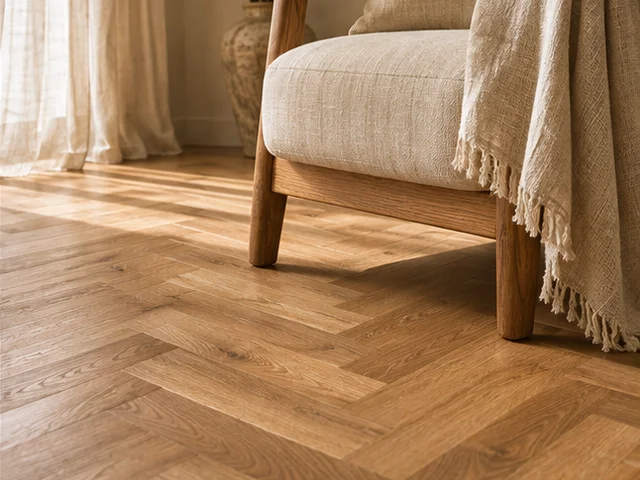
The marks followed a walking route
In this illustrative case, the parquet near the entrance of a Francavilla al Mare home had been laid about fifteen years earlier. People crossed a strip of stone with a short mat before reaching the wood. Small grains and marks pointed towards the stairs. The household wanted to renew the parquet but first wanted to understand where the dirt collected. The dry surface and mat edge were photographed. The survey distinguished the place where people removed their shoes from the spot where they put down a bag. The door and entrance cabinet were marked because they limited the position of any larger mat.
Inspecting grit at three points
The first inspection followed the route from stone to wood. It covered the mat, the transition and the floor in front of the stairs. The installer checked the finish instructions and distinguished loose debris from marks that remained after compatible cleaning. The grit was unevenly distributed. Some collected beyond the mat where people changed direction. The technician also inspected the stone surface and transition. Under the conditions observed, the joint between the materials needed no repair. The comparison therefore covered the position of the mat, seat and shoe area alongside the care of the parquet. Each location was marked on a plan for the next check.
Checking a longer mat with the door open
The household tried two templates. The longer shape intercepted more of the route but entered the door swing. A second shape followed the direction of the turn and kept the door clear. The mat backings were compared against the instructions for the surfaces below them. The shoe seat moved to the beginning of the stone strip, allowing people to remove shoes before reaching the parquet. The plan kept the transition clear for cleaning. It also checked that a bag set beside the seat would stay out of the walking route when the door was already open.
Checking before and after ordinary use
After the agreed cleaning, the installer photographed marks still visible in the wood and marked places to review after normal use. The household tried the route with shoes and a bag. One mat corner tended to shift when someone moved quickly past the cabinet, so its position was adjusted. A later inspection looked at where grit fell under the revised layout. The results were recorded as observations from that period. The mat was also taken up and the strip cleaned, with separate care instructions for the stone and parquet. Photographs showed the areas that needed to remain reachable.
Managing the route from the entrance to parquet
Mark where you remove shoes and photograph where grit collects. Ask the flooring installer to distinguish loose dirt, finish marks and the condition of the transition. Try the mat with the door open, a bag on the floor and the actual route to the stairs. At handover, retain the care instructions for both surfaces and mark where to check for grit after use. This example kept a drawing of the seat and the clear areas. Photographs of the earlier marks allowed later changes to be compared against the original condition before either the seat or the mat moved.
Francavilla al Mare · CH · Abruzzo · Distance and service-area coverage ↗
How we prepare the guides: sources and illustrative scenarios