Casa Pescara
Painting · 3 min · Published
Painting a radiator recess in Sulmona
An illustrative painting case about the wall behind a radiator and the edges revealed when a removable shelf came out of the recess.
Illustrative scenario · A narrative example of work stages and final checks; it does not document an actual completed project.
The shelf concealed an unfinished strip
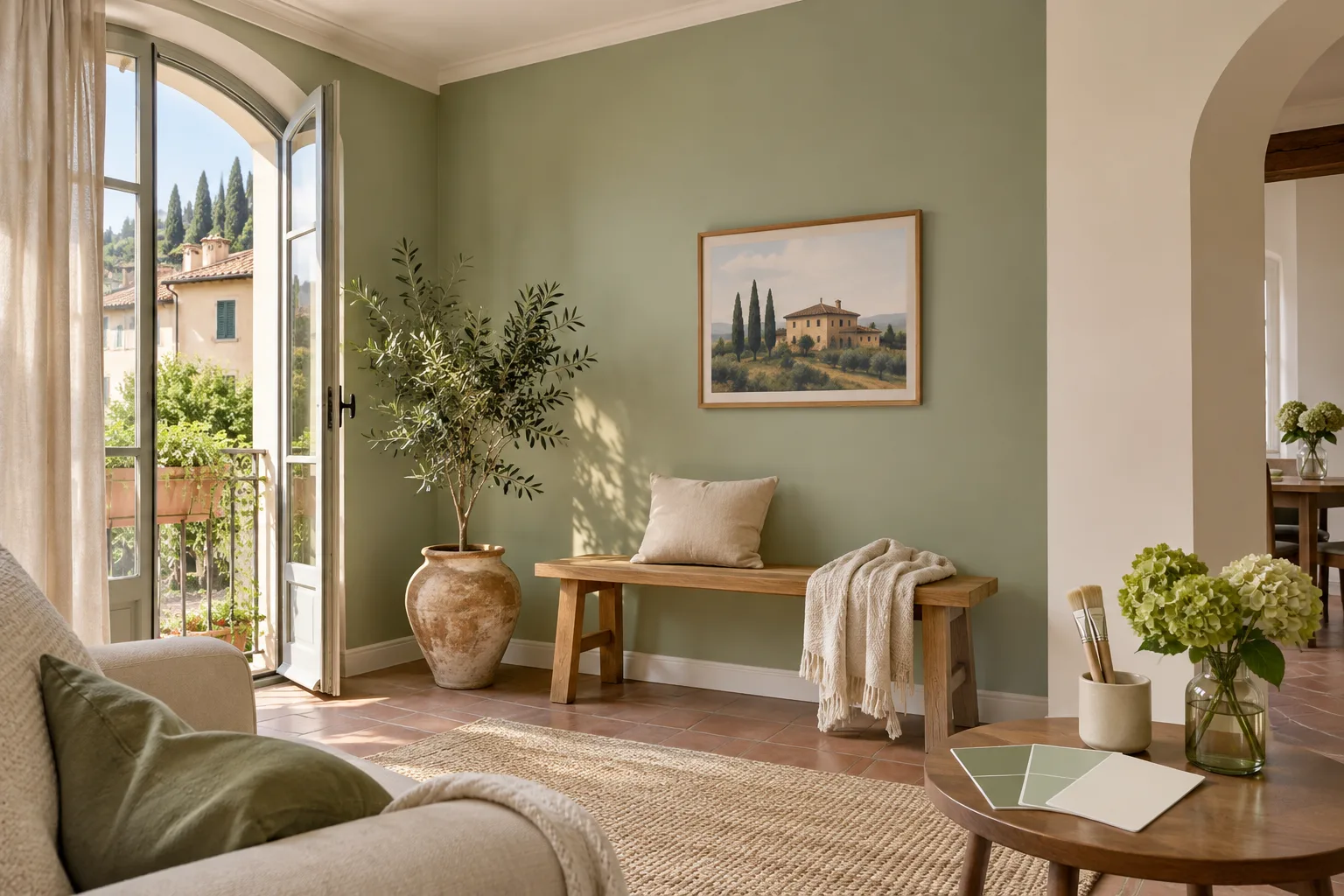
In this illustrative Sulmona case, a living room recess held a radiator with a removable shelf resting above it. The shelf came out when the area was cleaned. As soon as it was lifted at the survey, a strip of wall in the previous colour appeared. The painting plan included the front wall and sides of the recess but left out the stretch behind the shelf. The recess was viewed both with the shelf in place and with it removed. From the sofa the old edge appeared only when the shelf came out. From the window side, a short segment could be seen even with it in position. Both viewpoints went into the survey.
Surveying the least accessible side
Objects came out of the recess, and the edges were checked without moving the radiator. The lower area could be seen from the adjoining room but was hard to examine straight on. That viewpoint was marked before deciding how to reach the surface. Access behind the radiator was discussed with the person responsible for the heating system, so painting would not begin with parts that needed to move without a plan. The team also checked where the shelf rested on its brackets to keep its position consistent from trial to handover. The photographs distinguished the permanent edge from the one concealed only while the shelf was in place.
The trial extended the paint onto the back
The first sample stopped on the side at the line visible with the shelf in place. Once it came out, the old strip still made a sharp edge against the new colour. The next trial continued the paint across the back to the agreed accessible point. The comparison was repeated from the adjoining room, where light came from the side. From there the lower area mattered more than the strip higher up. The extent of work changed before the surface was prepared. The approved sample was kept to check that the recess and front wall still read together under the living room light.
The back came first and the shelf returned later
The area was made accessible as agreed, and the parts that would stay unpainted were protected. The decorator prepared the wall and finished the back of the recess before the front. The transition was compared while the shelf was still out. Light from the adjoining room helped reveal the lower side and the junction beside the bracket. The shelf went back after the finish had been inspected. Before the room was put back in order, it was tested on its brackets to make sure it could return without being pushed into the newly painted wall. The objects went back after a second removal trial.
Checking with the shelf in and out
At handover, the recess was first viewed with the shelf in place. It then came out for an inspection of the back, the lower stretch and the bracket locations. The sofa provided the main viewing angle. From the adjoining room, the team checked the edge that had previously been hidden from the front. The notes recorded how far the paint extended and which components remained accessible. Two photos showed the recess from the same position with and without the shelf. To finish the check, the shelf returned to the tested position, where the side junction that had prompted the larger paint area remained visible.
Sulmona · AQ · Abruzzo · Distance and service-area coverage ↗
How we prepare the guides: sources and illustrative scenarios