Casa Pescara
Painting · 3 min · Published
Painting in Pescara after removing an adhesive wall border
An illustrative case about separating residue, colour differences and raised edges before repainting a wall.
Illustrative scenario · A narrative example of work stages and final checks; it does not document an actual completed project.
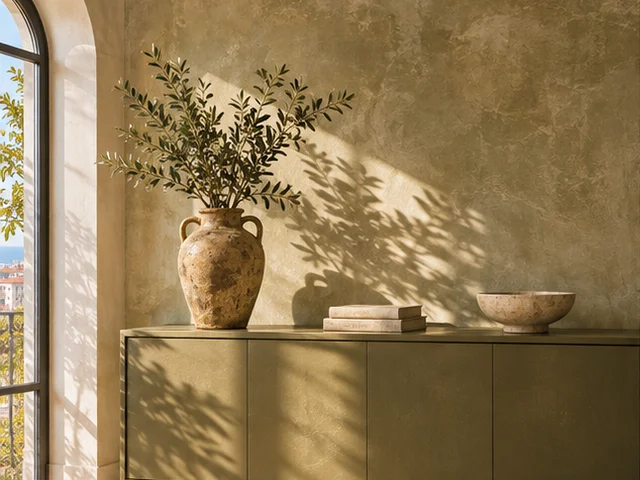
The strip stayed visible after the decoration came off
In this illustrative Pescara case, the room had last been painted about fifteen years earlier and had an adhesive border halfway up the wall. Removing the decoration revealed a lighter line. On one side the strip seemed to differ in colour only. By the door, an uneven mark showed on the surface. The initial brief was to cover the whole area with a new paint colour. The decorator delayed choosing a product until the background mark, raised edge and residue had been distinguished. The survey recorded the strip at three points: above a socket, beside the door and along the stretch receiving most light from the window.
The light angle changed what the inspection showed
Up close, the stretch above the socket looked even. In side lighting, the spot by the door showed a narrow edge that cast a shadow. Both surfaces were compared at the same time and the trace photographed with the door frame as a reference. The border was not treated as a single uniform problem along the wall. The quote distinguished surface inspection, preparation of the affected stretches and painting. No sample of the old border material had been kept. The decorator therefore agreed a limited trial and a surface check before extending any treatment along the strip.
The sample crossed the line rather than covering it all
The trial included an area above the strip, one below and the point where the edge showed. The first sample made the colour difference less obvious, but side lighting still revealed the raised area. Preparation widened only where the edge could be seen, and the comparison was repeated. By the window, checking the background was enough before extending the finish over the whole wall. The adjoining wall stayed outside the agreed work because the corner provided a clear boundary. The drawing identified which repairs had needed more attention than the rest of the surface. The photograph of the strip remained available for inspection.
Handover compared the wall at the same hour
The surface was prepared before the wall was painted between the two corners. The area by the door and the point above the socket were checked before furniture covers went back for the last carrying trip. At handover, the wall was viewed from the door at the same time as the trial and again with the room light on. The inspection looked for the old edge without relying on the photo to locate every stretch. The photo was used afterward to confirm the exact repair area and update the file with the colour and finish. The boundary at the retained corner went into the record too.
Planning a repair after removing an adhesive border
Photograph the border before and after removal, where it can be lifted without damaging the wall. Have residue, colour and texture examined separately and ask for a sample across the line. View it from the door and under side lighting before confirming where the paint will stop. Repeat the same views at handover with the usual furniture and lights. Keep the finish reference and the photographs of the repair points. If you add another decoration, ask the decorator which application and removal instructions apply to the selected product and that particular wall.
Pescara · PE · Abruzzo · Distance and service-area coverage ↗
How we prepare the guides: sources and illustrative scenarios