 Casa Pescara
Roofing · 3 min · Published
Repairing a ventilated roof ridge in L'Aquila
One ridge section obstructed the intended air path. This scenario follows the component checks and a repair limited to that section.
Illustrative scenario · A narrative example of work stages and final checks; it does not document an actual completed project.
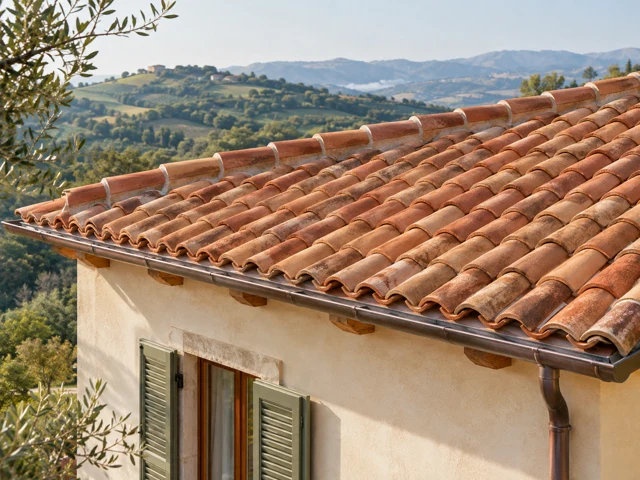
An earlier repair had interrupted the ridge
In this fictional scenario in L'Aquila, a pitched roof had been built with a ridge designed to let air out of the ventilation cavity. During a scheduled inspection, the technician noticed a patch near the centre. In that area, a finish unlike the rest appeared to close the space alongside the ridge tiles. The fictional homeowner had no photographs of the earlier work. The contractor arranged protected access to investigate without opening the entire ridge at once. The assignment included identifying the components that could remain and proposing a repair for the altered stretch. The scope would expand only if the survey found interruptions elsewhere on the roof.
The comparison used an intact section
The inspection began with the available roof drawing and a section of ridge that showed no visible patching. The technician recorded the shape of the tiles, how they ended on either side and where their supports sat. An authorised opening in the altered section revealed added material occupying part of the air path. The eaves were checked for the same condition, since air was intended to enter there in the original arrangement. Observations were recorded separately for inlet, cavity and outlet. The documented problem was at the ridge. The crew left identifiable parts of the existing system in place so the repair could use a reference close to the affected section.
The new component had to fit at both ends
The technician specified a ventilated junction compatible with the profile of the covering and the support arrangement for the ridge tiles. The product was assessed as part of the assembly, with attention to the air path and weather protection at its outlet. A dry fit compared the profile with the tiles that would remain. The drawing marked where the new section would meet the existing ridge because a break at either end could interrupt the restored path. The crew also checked whether the recovered tiles could be used in the new arrangement. Pieces with damaged edges were set apart from those that could go back.
The cavity was inspected before closing
The contractor worked on the agreed length and kept temporary protection available for the open section. Once the added material was removed, the technician checked the mouth of the cavity on each slope. The ridge junction was installed to the approved detail and the system instructions. Before replacing the tiles, the technician photographed the inside of the junction, including both connections to the retained ridge. Once the tiles were laid, the team checked that none of the recovered pieces obstructed the intended openings. This was done from the contractor's protected work position. The accessible attic beneath was also viewed to update the survey photographs without estimating the volume of airflow.
The file marked both junctions
The handover file marked the replaced length on a simple ridge drawing. The fictional homeowner received before-and-after photographs and references for the components used. The positions of the junctions and the part of the eaves seen during the survey were recorded. That information made it possible to plan a future inspection without treating the entire covering as newly replaced. The report distinguished visual inspection of the path from any later assessment of conditions in the attic over the following season. The crew completed its checks by looking over the tiles around the access area, then reopened the space at ground level that had been used for the work.
L'Aquila · AQ · Abruzzo · Distance and service-area coverage ↗
How we prepare the guides: sources and illustrative scenarios