Casa Pescara
Painting · 3 min · Published
Painting in Rancitelli after a cabinet moved
An illustrative case in which a previously covered strip changed the extent of painting after comparison with the exposed wall.
Illustrative scenario · A narrative example of work stages and final checks; it does not document an actual completed project.
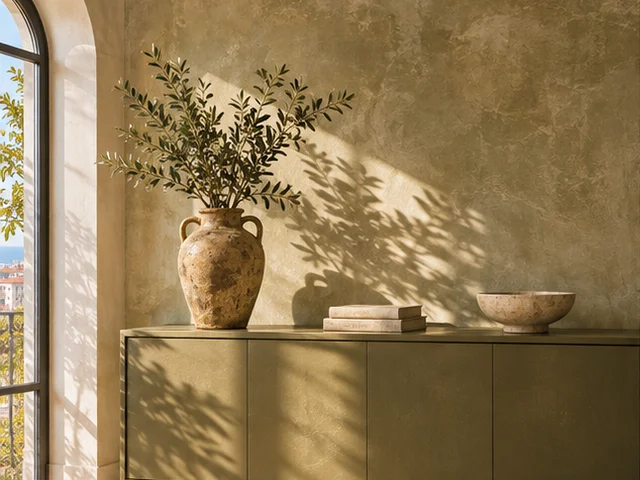
The mark followed the exact shape of the cabinet
In this illustrative Rancitelli case in Pescara, a low cabinet moved away from a wall that would remain exposed. A lighter rectangle appeared, sharply defined along its top edge and less obvious by the skirting. The adjoining bay had a similar wall colour, but no sample of the original product was available. The first request was to paint only the rectangle. At the survey, the team looked at the corner between the two walls too, because a local repair would have to blend with the section that had remained exposed. The upper edge, the former contact point and the stretch continuing toward the window were photographed.
Comparing colour in two parts of the wall
The decorator examined the colour by the window and then below the edge of the rectangle. The exposed area showed slight differences between its upper and lower parts. A sample went next to both areas, rather than using only the portion previously behind the cabinet as a reference. In diffuse light it looked close to the upper stretch. With the lamp on, it appeared lighter than the lower area. The spot with the clearest difference was marked on a photograph. The comparison showed that a match in a single place would not give the same result around the entire outline of the old mark.
Moving the end of the paintwork to the corner
A small trial patch softened the difference in the middle of the rectangle. From the entrance to the room, however, a change remained visible near its upper end. The colour was then tested at the corner against the adjoining wall. There the transition between the two surfaces made sense without repeating the shape of the cabinet. Painting extended across the full wall to that corner and the edge near the window. The adjoining wall stayed available as a reference during preparation. The cabinet was not coming back, so the lower area, previously out of sight, also counted when deciding where the work should end.
Checking hidden marks before painting
The previously covered area had two small marks from the back of the cabinet and a stretch of skirting that had been inaccessible. These were inspected before the wall was prepared so the colour imprint could be distinguished from marks with a physical edge. Repairs were checked in light from the window. When the surface was ready, the decorator painted within the agreed limits and left the corner visible for comparison with the adjoining bay. The lower area was inspected before the seats returned, because after the room was put back in order it would still be visible close up but harder to reach with tools.
Checking the wall without covering it again
At handover, the area of the mark was viewed from the doorway and then at close range with the room lamp on. The outline of the cabinet did not appear along its former edge. The junction at the corner, the stretch by the window and the edge above the skirting were checked. A chair came back for the last viewing, while the wall stayed free of tall furniture. The final record identified the paint boundary and the product reference. A wide photograph included both walls in a single frame. It showed where the work ended and what the previously covered area looked like when it was fully exposed.
Rancitelli · Pescara · PE · Abruzzo · Distance and service-area coverage ↗
How we prepare the guides: sources and illustrative scenarios