Casa Pescara
Home renovation · 3 min · Published
Cappelle sul Tavo renovation around an indoor letterbox
An illustrative case about a letterbox door that interfered with the entrance door and the checks made before finishing.
Illustrative scenario · A narrative example of work stages and final checks; it does not document an actual completed project.
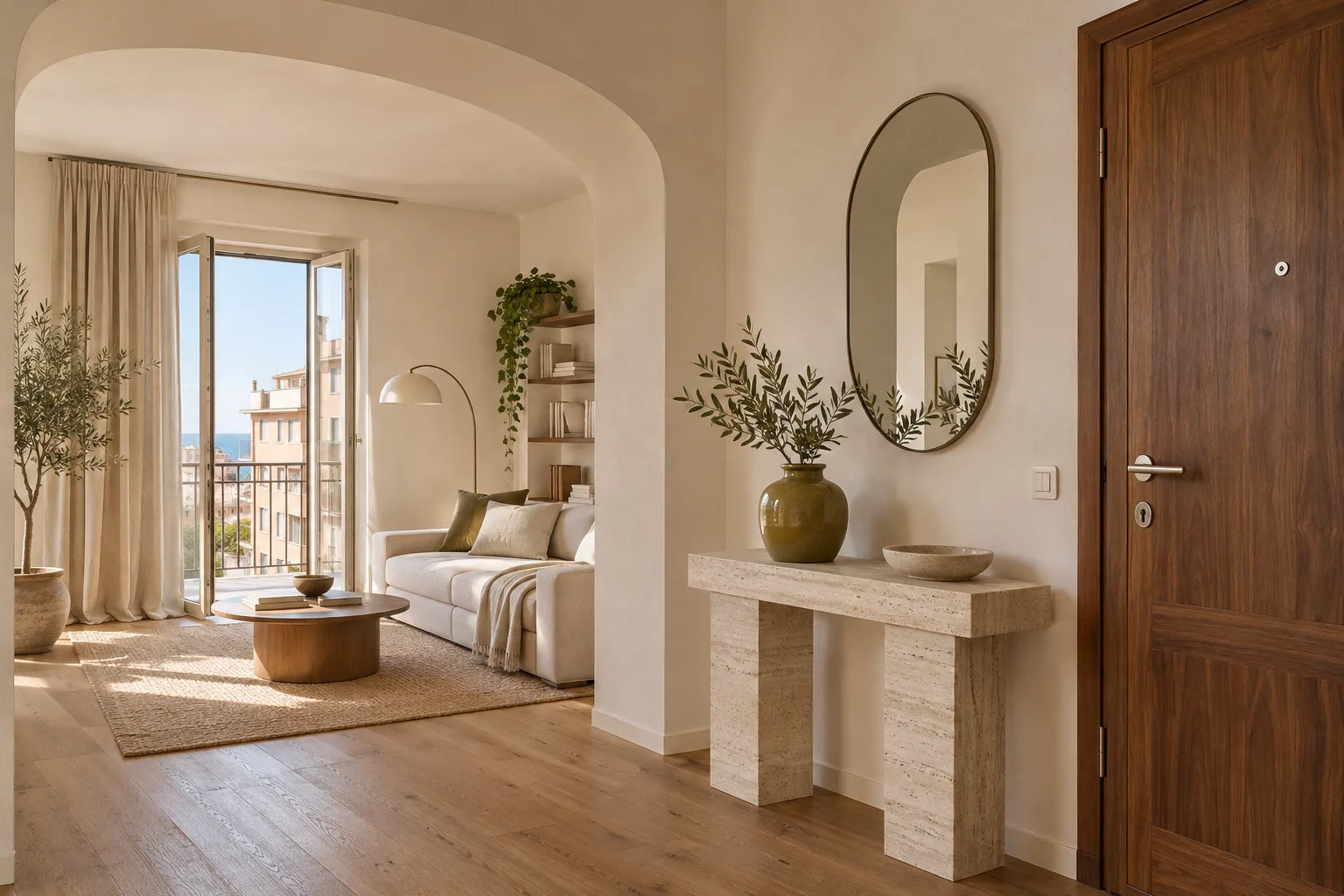
Collecting post used the same space as the entrance door
In this illustrative Cappelle sul Tavo case, the entrance had been finished about fifteen years earlier. Post came through a slot into a box with an inside door. After the survey for repainting the wall, someone tried collecting an envelope while the entrance door was ajar. The letterbox door came close to the main door handle. A thicker envelope meant opening it further, reducing clearance again. The drawing recorded the positions of both doors in motion. The wall renewal was coordinated with the letterbox because the finish edge would change where its frame sat.
The slot remained a fixed reference
The person examining the system checked which parts could stay and how the box could be reached from inside. The outside slot did not need to move. Different ways of collecting the post could be considered if the envelope still had a clear path. The first option used a shallower door, but put its grip on the entrance-door side. A mock-up tested hand movement and the clearance needed to take out an envelope without folding it. The sketch also recorded the trial envelope's size and the area near the wall where someone held a bag when they came home.
A stiff envelope changed the opening
The first sample opened with one hand while the box was empty. With a stiff envelope inside, however, it had to be guided toward the entrance door. An alternative opened toward the clear side of the entrance. The envelope came out without interfering with the main door. The reverse movement was checked too, closing the letterbox door while already holding the envelope. The new position kept the entrance swing clear. The final drawing showed the grip side, frame margin and where the paint would end. Those references were confirmed before the parts being replaced came out.
Separate checks for the finish and the fitting
The opening was made accessible, the edge prepared and the position of the frame checked before finishing. The door went back after the wall inspection. At handover, an envelope was put in from outside and collected from inside. The test was repeated with the entrance door ajar and again open as it normally stood. The envelope stayed out of the path of the handle. Finally, the wall and letterbox junction was checked with the light on. The handover sheet kept the door reference and a photo of the open frame. The edge of the wall remained visible after the entrance items returned.
Before choosing a new letterbox door
Bring an envelope to the survey that represents the bulkiest post you normally receive. Show where the entrance door stands in use, and ask to try collecting the envelope and closing the box without moving the furniture each time. Agree the edge between frame and wall before painting begins. At handover, repeat the route from posting outside to collecting inside and keep the photo with the door open. Clean the edge according to the component instructions and watch for contact with the main door handle. Compare the movement with the recorded trial before changing the grip position. Keep the envelope size with the fitting reference so someone replacing the door can compare its usable opening with the arrangement you tested.
Cappelle sul Tavo · PE · Abruzzo · Distance and service-area coverage ↗
How we prepare the guides: sources and illustrative scenarios