 Casa Pescara
Roofing · 3 min · Published
A dent beside a metal roof seam in Pescara
A panel was distorted near a seam. This case follows checks on the underlying layers and comparison of repair and replacement.
Illustrative scenario · A narrative example of work stages and final checks; it does not document an actual completed project.
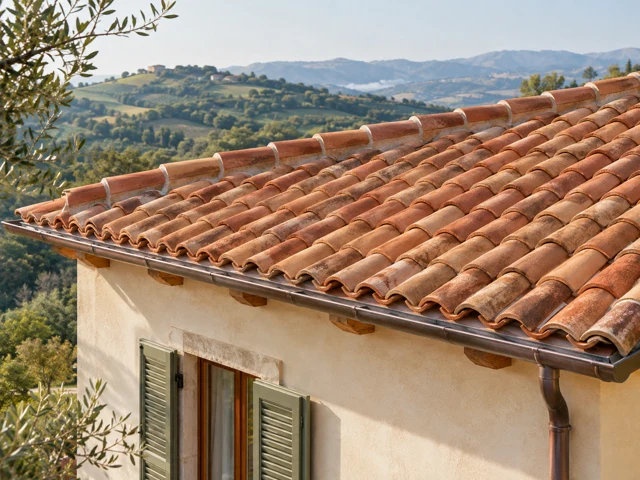
The survey began with two photographs of the same panel
In this fictional scenario in Pescara, a metal roof had last been repaired about fifteen years earlier. Two maintenance photographs showed the same panel at different times. The later image showed a dent near a seam. The person responsible for the fictional building asked whether touching up the finish would be enough. The technician planned to survey the shape, examine the seam and compare local repair with panel replacement before deciding. The photographs dated the change but did not establish what had caused it. The contractor organised the visit with protected access. Available system references were gathered to identify the panel and its connections.
The deformation extended to the seam
From protected access, the roofer examined the panel and the adjacent one. The technician recorded the extent of the dent and the condition of the finish. The underside was also inspected from an accessible location. The mark reached beyond the flat surface to the seam where the panels met. Findings were compared with a sound section, and the team assessed whether the backing was involved. The drawing distinguished the distorted area, retained parts and the detail that would become visible during removal. The contractor avoided proposing to straighten the panel in place without checking the system. The technician recorded which conditions called for replacing the panel instead.
The replacement was trialled on a sample seam
The technician chose to replace the affected panel and retain neighbouring pieces that passed inspection. The replacement was specified for its profile, compatibility and finish. The contractor prepared a ground-level sample to compare the seam with the adjoining panel. The schedule showed what would be opened, the temporary protection and the check of the substrate before closing. It also established how the seam would be inspected after fitting. The fictional homeowner could compare the replacement boundary with the original touch-up proposal. The revised estimate explained the decision by the damage reaching the seam, rather than treating the roof's age as a reason to replace the whole slope.
The final check followed the complete seam
The contractor opened the planned area and showed the substrate to the technician. After that review, the panel was installed and its junction checked before the edge details were completed. The crew followed the seam to both ends and compared the nearby covering with the original images. At handover, the record identified the replacement, its position and the observed condition of the backing. One photograph showed the panel from protected access and another located it from the courtyard. The sample references stayed with the roof record. For future visits, the contractor marked where to compare any new signs along the same line.
How to decide when a dent reaches a seam
Collect available photographs without accessing the roof and note when the dent became visible. Ask the roofer and technician to assess the seam, finish and backing using protected access. Before approval, request a comparison of repair and replacement, with a replacement sample if needed. At handover, keep photographs of the exposed layers, the panel position and the inspected seam reference. After rain or wind, record changes only from the ground or indoors. If another visit is needed, show the photograph of adjoining panels so the replacement can be distinguished from the rest of the slope.
Pescara · PE · Abruzzo · Distance and service-area coverage ↗
How we prepare the guides: sources and illustrative scenarios