 Casa Pescara
Roofing · 3 min · Published
Repairing roof eaves mesh in Silvi
Debris below the eaves prompted checks on ventilation and nesting birds before work began. This case follows both decisions.
Illustrative scenario · A narrative example of work stages and final checks; it does not document an actual completed project.
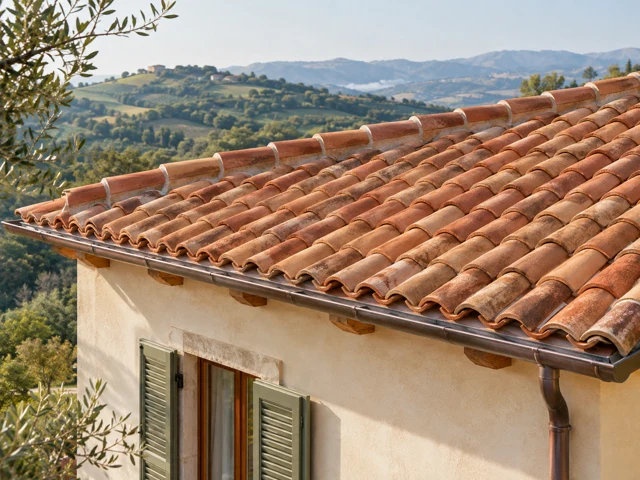
Debris below the eaves did not settle what to do
In this fictional scenario in Silvi, mesh had been installed beneath the roof edge about fifteen years earlier. During courtyard cleaning, strands and fragments were found near the wall. From the ground, one part of the mesh edge appeared open. The person responsible for the fictional house considered having it closed. The contractor asked for work to wait until the presence of birds and the function of the eaves opening could be assessed. The plan began with an observation from a distance, followed by a technical review of the junction and a final check of the air path. The timing decision would come before selection of the mesh.
The visit changed the order of work
The initial observation showed birds repeatedly flying towards the opening. The technician postponed work there and sought advice from a qualified specialist. In the meantime, the roof underlay drawing and ground-level photographs were gathered. The debris in the courtyard was logged as a clue and was not used to identify the species or declare the opening vacant. Once the specialist confirmed that work could proceed, the contractor arranged protected access. The close survey showed that part of the mesh had separated from its support. The crew also checked the air path behind the mesh, which was designed to remain open.
The replacement preserved the purpose of the eaves
The designer compared the edge profile, fixing arrangement and need to preserve the planned air path. A component was chosen to suit the existing supports and exposure of the area. A sample was trialled where the edge changed direction. The previous mesh left an opening there because its two ends met on different planes. The revised design showed an identifiable end piece in the drawing. The team also checked that the piece would not project into the route taken by water towards the gutter. Sound parts were marked separately before ordering the materials needed for the local repair.
The check took place before the finish went back
During the agreed period, the contractor removed the affected section and documented the backing. The technician checked the trial end piece, then installation continued along the straight stretch. The crew checked the air path and position relative to the gutter before putting the finish back. Photographs recorded the edge where the original opening had been. The alignment was compared with the initial images from ground level. The courtyard reopened once work debris had been collected. The record kept the technical mesh checks separate from the decision on timing, so the chosen date would not be read as a general rule.
Where to start when an opening appears
Observe the edge from the ground and note repeated visits by birds. Avoid disturbing the area. Ask the technician to coordinate a qualified assessment before the contractor schedules closure. Once work can proceed, ask what the eaves opening does and which component will preserve its air path. Approve the detail after seeing the drawing of the end and the route taken by runoff. At handover, keep a photograph taken before finishing and a view from the courtyard. If more debris or bird activity appears, use those references when arranging another inspection with the appropriate specialists.
Silvi · TE · Abruzzo · Distance and service-area coverage ↗
How we prepare the guides: sources and illustrative scenarios