Casa Pescara
Painting · 3 min · Published
Painting in Zanni with a colour break at a lowered ceiling
An illustrative Pescara painting scenario in which the colour line moved after a comparison of the ceiling edge and its shadow.
Illustrative scenario · A narrative example of work stages and final checks; it does not document an actual completed project.
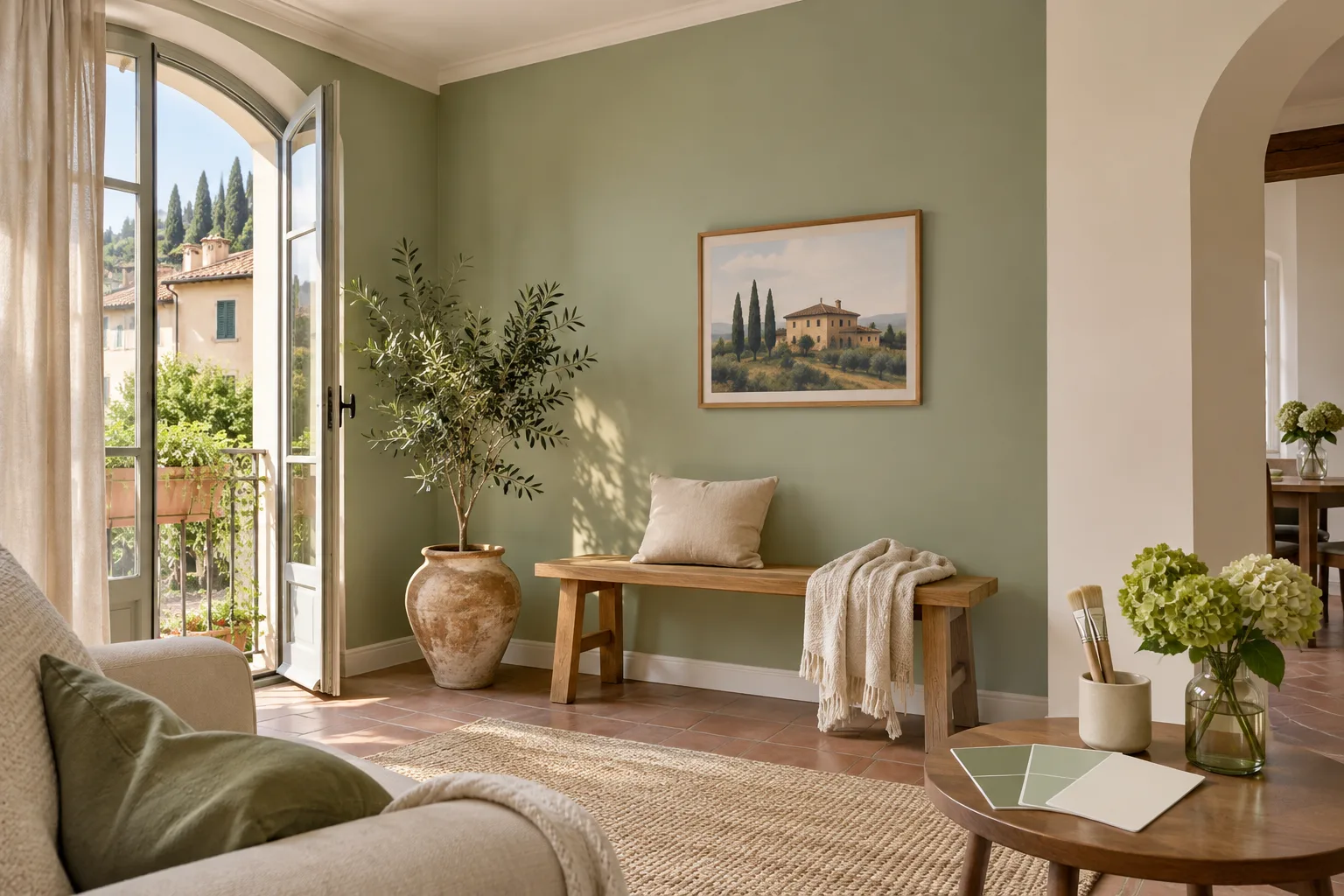
A colour break seemed to bend by the door
In this illustrative case in Zanni, Pescara, the lowered ceiling over part of the living room was due to receive the same light paint as the main ceiling. On the drawing, the wall colour ended at the level of the drop and ran horizontally to the door. At the survey, the underside of the ceiling turned out to sit at a varying distance from the floor. The lamp also cast a diagonal shadow close to the proposed paint line. Up close the marks looked separate. From the doorway they appeared to form a single bend exactly where the eye followed the opening between rooms.
Separating the line, the shadow and the corner
The wall was viewed with the lamp off and again with it on. The actual corner went onto a sketch, along with the area where the evening shadow fell. The view from the sofa was also examined, because a bookcase concealed part of the drop from there. The person preparing the samples drew two alternatives on a removable board. One kept the horizontal line. The other used the ceiling return as the changeover and stopped before the doorway. Before a decision, the board came out of the room so its own shadow could be ruled out as a source of confusion.
The close-up trial missed something
The first alternative looked orderly when viewed from beneath the drop. From the adjoining room, however, it left a small light patch between the shadow and the horizontal line. The comparison was repeated as someone walked from the doorway to the sofa. The patch became more noticeable during the movement. The second alternative was chosen and a short sample tried on the return. The lamp went back on after tools that blocked its beam were moved. The shadow landed on the side already intended for the light colour. The revised limit went onto the drawing with the exact point where the colour would stop short of the door frame.
Preparing the edge before applying colour
Before painting, the small marks close to the corner were checked, separating those on the new boundary from those in the dimmer area. The decorator prepared the surface and used the approved sample to locate the transition on the return. Above the door, the wall colour continued as shown in the revised plan. After the first section was finished, the living room lamp went on and the corner was viewed from the adjoining room. That check happened while the rest of the work could still be reached. The small stretch behind the bookcase was also inspected before proceeding because it would be concealed once the furniture went back.
The doorway view closed the check
At handover, the coverings came off and the bookcase returned to its place. The change of colour was viewed from the door, the sofa and beneath the ceiling drop, first in daylight and then with the lamp on. Someone walked the route from door to sofa once more to check the point where the light patch had appeared. The note identified which face of the return belonged to the ceiling and which to the wall. The handover photograph included the lamp and the door frame. That preserved a view of the whole edge, with the shadow in the position seen when the sample was chosen.
Zanni · Pescara · PE · Abruzzo · Distance and service-area coverage ↗
How we prepare the guides: sources and illustrative scenarios