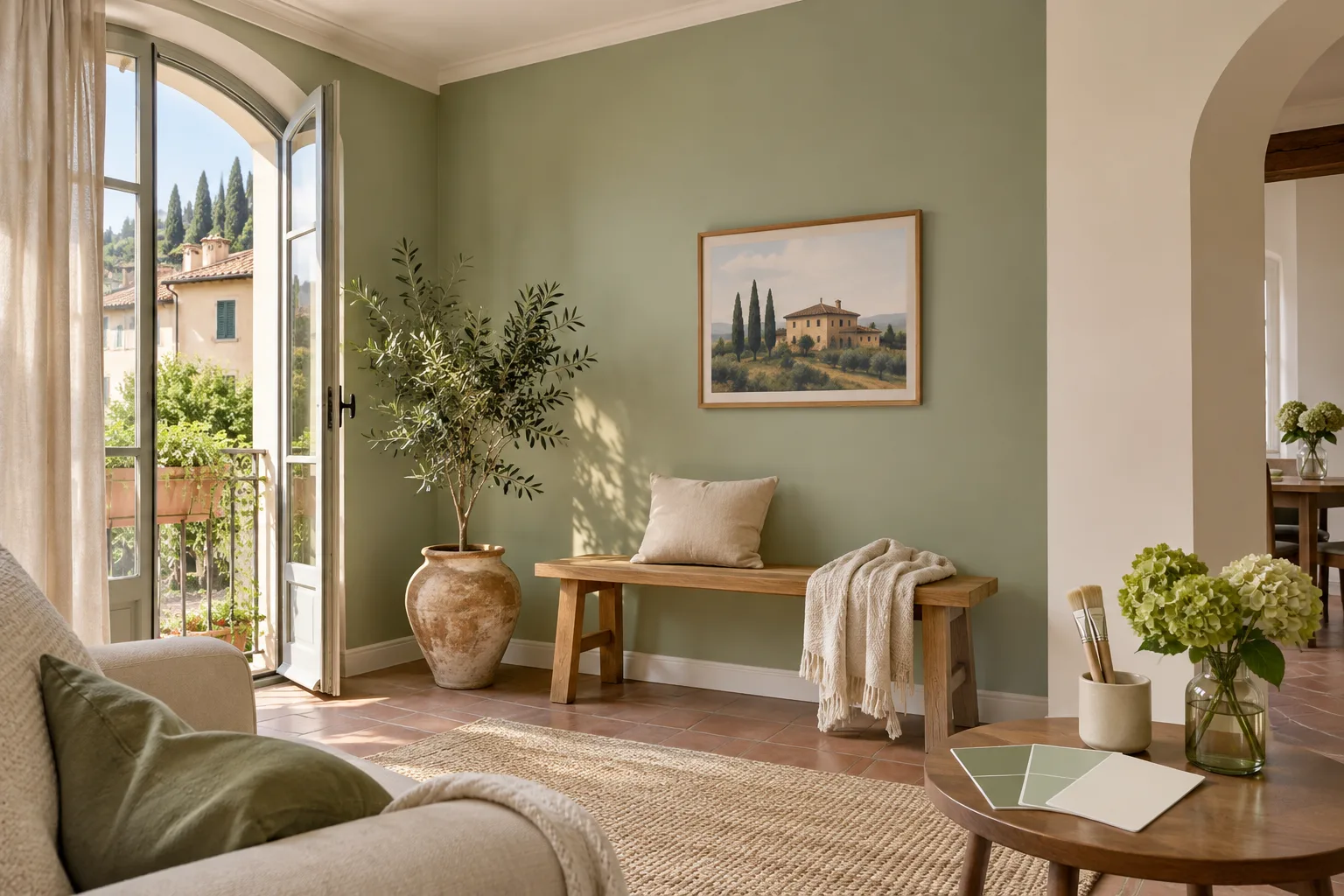
Casa Pescara
Painting · 3 min · Published
Painting a door and wall in one colour in San Donato
An illustrative Pescara case in which different finishes on the door and wall changed the paint choice.
Illustrative scenario · A narrative example of work stages and final checks; it does not document an actual completed project.
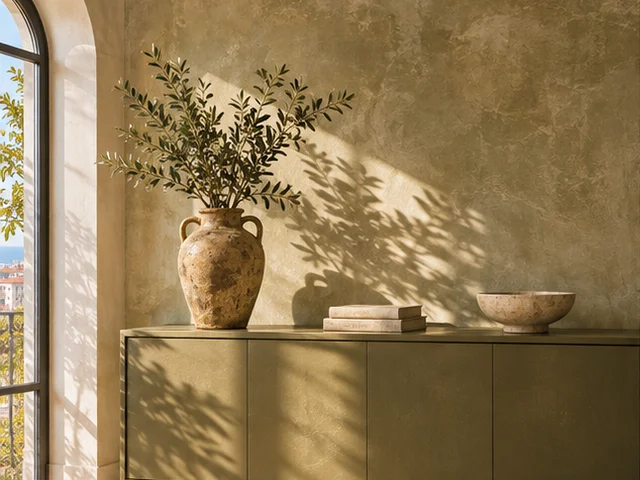
The door stood out when it closed
In this illustrative case in San Donato, Pescara, a smooth door separated the living room from the lobby. It was going to be painted in a colour close to the wall to soften the contrast when shut. At the survey, the panel reflected a floor lamp while the wall beside it looked even. The first sample, made only on the wall, looked suitable with the lamp off. Switching it on made clear that a comparison on one surface was insufficient. The painting plan changed to consider the colour, the reflection on the door and the continuity around the frame together.
Two sample boards represented two surfaces
One sample was prepared for the wall and another for the door. The decorator first checked the existing finishes, particularly around the handle and on edges touched when opening. The trial marked the two finishes on the same sketch so it was easy to tell which sample belonged to each surface. The boards went beside the frame with the door open and again with it shut. In diffuse light, the transition seemed restrained. With the floor lamp on in its usual position, the panel showed a reflection visible from the sofa. The lamp height went onto the notes because a work light had produced a reflection in a different place.
The second trial kept the original wall colour
The original colour stayed as the wall reference. A second sample for the door used a less reflective finish from those considered suitable after inspecting the existing coating. Its colour appeared closer to the wall, especially along the handle side. The frame was also checked before making the decision, because a strip of the old colour remained between the door and wall. The face visible from the living room would be painted with the panel. The inside face of the frame stayed matched to the lobby. The break was marked with the door ajar so it was clear which edge appeared in each room.
An order for the wall, door and hardware
The decorator prepared the wall repairs and inspected worn patches on the door separately. The hardware was protected before work began, and the frame edges stayed accessible so the transition could be checked. The wall was finished before judging it beside the door because pale covering material had affected the earlier comparison. When the finishes were ready, the handle edge was viewed from the entrance with the door shut. The transition to the inside face of the frame was then checked with the door open. The closing edge was examined before the door went back into use, so the appearance was inspected together with movement.
Checking with the lamp back in its usual place
At handover, the floor lamp went on and the door was closed from the entrance. From the sofa, the team compared the reflection on the door with the colour visible on the wall. The door was opened and closed again to check the handle, edges and contact with the frame. From the lobby, they inspected the point where the living room colour ended. The notes recorded the two products and the finish used on each surface, together with the approved sample. Keeping both finishes in the handover record mattered because the colour alone would not have reproduced the choice made after the trials.
San Donato · Pescara · PE · Abruzzo · Distance and service-area coverage ↗
How we prepare the guides: sources and illustrative scenarios