Casa Pescara
Painting · 3 min · Published
Painting in Pescara Colli after sampling beneath a coloured blind
An illustrative scenario about testing paint with a coloured blind up and down and under the evening light.
Illustrative scenario · A narrative example of work stages and final checks; it does not document an actual completed project.
Two photographs seemed to show different paints
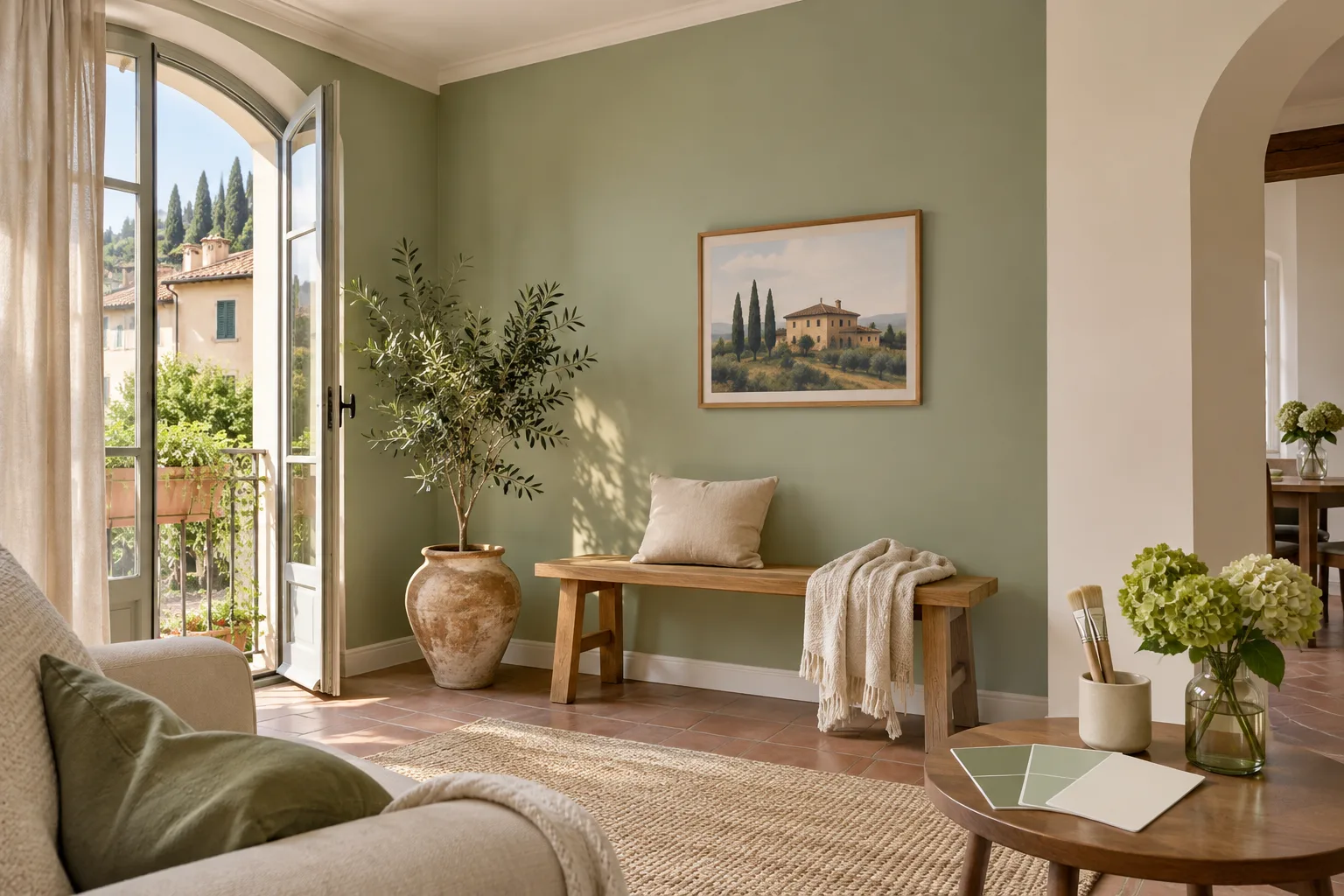
In this illustrative Pescara Colli case, a room due for painting had an amber blind that stayed down during the brightest hours. While choosing a colour, two photographs of the same sample seemed to show different shades. One was taken with the blind up and the other with it down. Before rejecting the sample, the team repeated the viewing in person with the board kept in the same position. The room was also used after sunset, when light came from a single lamp. The trial needed to include that lamp as well as the filtered daylight. The first pictures helped identify when the change happened, but the colour was chosen in the room.
The blind affected the side wall most
The first board was held near the window and then against the wall opposite. The most noticeable change was on the side wall, where filtered light struck at an angle. There the sample appeared warmer than it did beside the window frame. The board stayed against the side wall while the blind went up. The contrast changed within moments even though the board did not move. That spot became the reference for later trials. A second board stayed down near the skirting because the same colour would also be seen next to a dark floor. Both locations appeared in a wide photograph of the room.
The evening lamp changed the order of preference
Two samples in the same finish were prepared for comparison so the light was being judged without a second difference in sheen. With the blind down, the first came closest to the intended effect. In the evening, under the usual lamp, it lost contrast with the light door trim. The second retained a readable edge and stayed reasonably close to the original choice in full daylight. Both stayed in the room for another afternoon viewing. That check confirmed the second sample before the full quantity was ordered. The blind remained in the plan and stopped being treated as something to remove while choosing the paint.
Keeping the sample available during painting
The walls were prepared, and the blind went up to give access to the window reveal. The approved board stayed outside the work area and came back when the first section was ready to inspect. The colour was compared by the door trim and on the side most affected by the filtered light. The edge near the window was checked after the rest of the room had been uncovered. The blind returned to its usual height when the protection came out. The lower part of the wall was then inspected, where the floor had been covered during the work.
Three scenes at handover
Handover repeated the three scenes that had guided the choice: blind up, blind down and lamp on. The door trim remained easy to see in every scene. From the evening reading position, the relationship between the side wall and the wall opposite was also checked. The note recorded the approved sample, the finish and the viewing spot. The final photograph included the blind in its usual position rather than showing a wall in isolation. Someone entering later could recognise the appearance that had been evaluated under everyday conditions and find the reference again if a repair was needed.
Pescara Colli · Pescara · PE · Abruzzo · Distance and service-area coverage ↗
How we prepare the guides: sources and illustrative scenarios