Casa Pescara
Parquet · 3 min · Published
Laying oak parquet from two batches in Vasto
Two deliveries of oak differed in tone. This example covers checking the batches and arranging the boards before installation.
Illustrative scenario · A narrative example of work stages and final checks; it does not document an actual completed project.
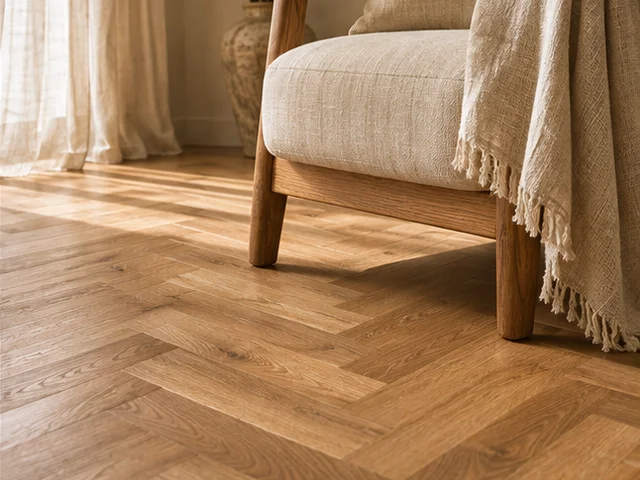
The contrast showed up in the light from the door
In this fictional scenario in Vasto, two deliveries of oak parquet were intended for a continuous living area. The first was expected to cover the sitting room. The second, ordered after the scope grew, was meant to reach the dining table. Before starting, the installer put two boards side by side near the glazed door and saw that some from the second delivery looked lighter. The difference was most apparent from where the fictional household would enter the room. The client requested a larger floor sample. Installation had yet to start, so there was time to see whether the variation affected individual boards or ran through much of the second delivery.
Specifications were checked before colour
The installer checked package references against the delivery documents. Before bringing the two batches together, the board dimensions, finish and joining profile were compared, and compatibility within the system was confirmed. Sample packages were opened according to the instructions, and boards were set out on a protected surface. The review covered faces, ends and the kind of variation observed. Each batch included some boards in an intermediate tone. The installer noted which packages contained them instead of assigning one colour to an entire delivery. Two checks in different light showed that the apparent separation changed with the viewing angle. That allowed a layout to be planned without classifying boards as defective on colour alone.
The sample followed the shape of the opening
Instead of trialling the boards against a single wall, the installer set out a dry layout along the line linking the entrance, sitting area and table. The first sample had clusters concentrated near the opening. A second arrangement distributed intermediate boards near the most visible areas, while still accounting for usable lengths and cuts. The decision kept the specified oak and used the documented variation to organise the installation. A small group was held back for future repairs. The fictional homeowners looked at the sample from the doorway and from the seating area. Their selected version became the reference for opening packages in sequence alongside the manufacturer's technical instructions.
A pause prevented a light band across the room
Installation began once the substrate was checked. The installer kept the labels legible while preparing groups of boards. Halfway across the room, work paused where the light from the glazing crossed the opening. Several pale boards had ended up too close together again because the end cuts had changed the sample order. Before they were fixed, they were exchanged with pieces of the same usable size. The next check covered the alignment of the rows and the transition towards the table. Usable offcuts stayed apart from cutting waste. The boards set aside for repairs were not needed for the last row and could be stored with references for both deliveries.
Two packages preserved the batch references
At the final review, the room was crossed from door to table in daylight and with the lamps on. The differences between boards remained visible across the floor instead of clustering at the boundary between the deliveries. The installer retained the labels and left the fictional client spare pieces from both batches. A photograph of the cleared room showed the distribution before furniture and rugs returned. The handover sheet recorded the maintenance product and the location of the spares. If a board needed replacing later, the work could start by comparing it with the retained pieces, which had already been identified and were available.
Vasto · CH · Abruzzo · Distance and service-area coverage ↗
How we prepare the guides: sources and illustrative scenarios