Casa Pescara
Kitchen · 3 min · Published
Francavilla al Mare kitchen renovation with warped fronts beside the dishwasher
An illustrative case about what the team checked before replacing two fronts beside a dishwasher.
Illustrative scenario · A narrative example of work stages and final checks; it does not document an actual completed project.
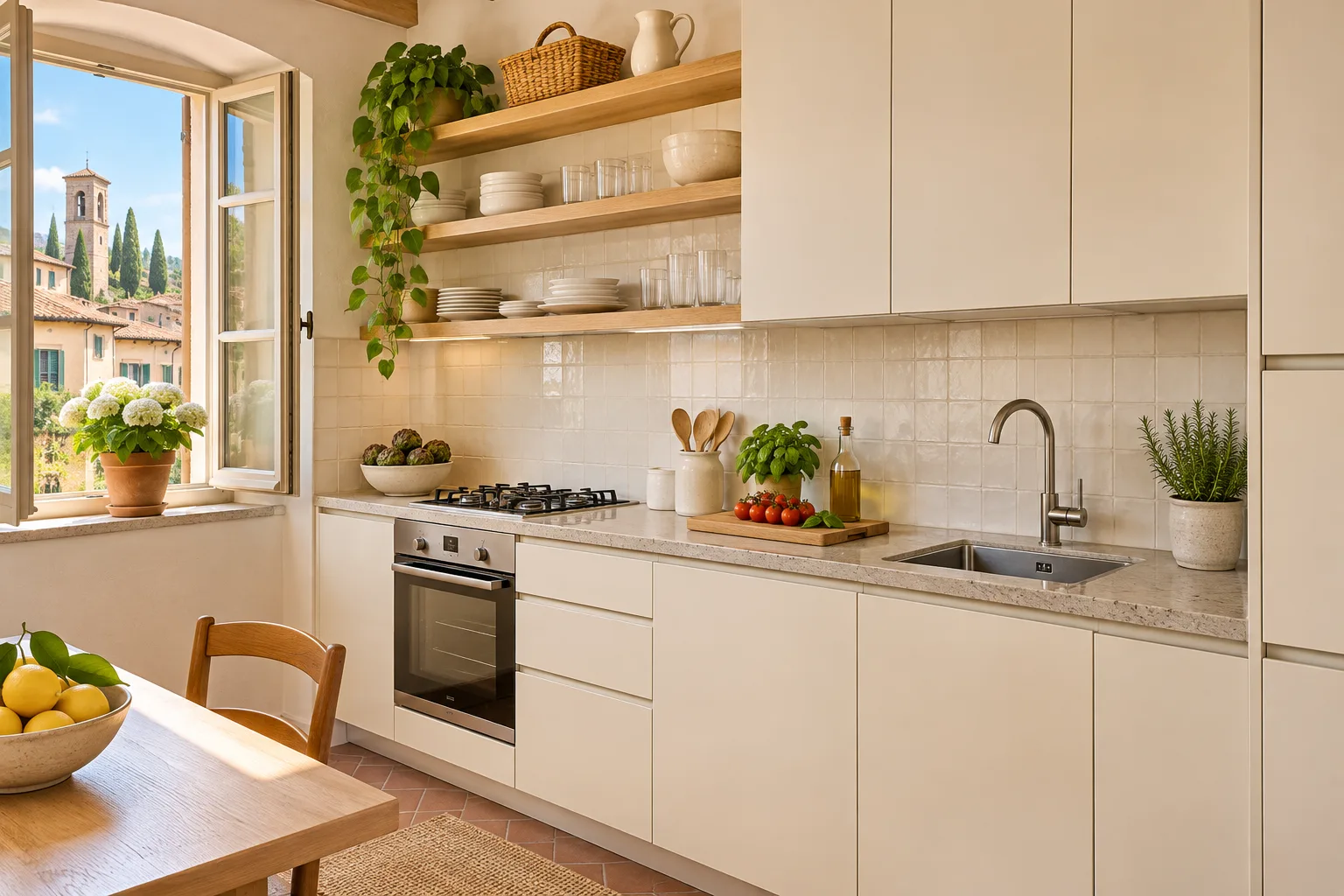
Only one side showed a lifted edge
In this illustrative Francavilla al Mare case, the kitchen had been refurbished about fifteen years earlier. One cabinet front beside the dishwasher had lifted at its upper edge, and the one next to it showed a milder mark. The first request was for a replacement in the same colour. During the survey, the team asked when the change had first appeared and compared the parts beside the appliance with other cabinets. The fictional household said they saw moisture there most often after opening the dishwasher. That observation went into the survey with the location of the mark, while the cause still needed checking before new fronts were ordered.
The check separated the appliance from the cabinet
The person responsible for the dishwasher checked its position and consulted the installation instructions for that model. The fitter separately inspected the front surfaces, worktop edge and parts that had stayed dry. The appliance door was watched as it opened, and the cabinet areas exposed during that movement were marked. One proposal replaced both fronts. Another replaced only the warped front and adjusted the arrangement beside the machine. To compare them, the team requested a trial once the cabinet opening had been checked. Photos included the edge hidden by the front because it would disappear from view once refitted.
A trial changed the order of the work
The professional identified an installation detail near the edge to address using the guidance for that model. That point became accessible and the agreed change came first. The opening was then observed during normal use of the appliance, following the manufacturer's instructions. The trial helped establish which parts to replace and which front could stay. A replacement sample was viewed beside the retained finish in daylight and under the worktop light. The approved sample was compared with the removed front's dimensions. It was ordered after the edge and door travel were checked so the new piece would not affect movement.
Handover included a cycle and a view beneath the worktop
After fitting, the adjoining doors and the appliance opening were checked. At handover, the edge was viewed after a cycle run under the agreed conditions. Survey photos were compared with the replaced and retained fronts. The sheet recorded the dishwasher model, replacement finish and inspection point beneath the worktop. It also showed where to look if a mark returned. An open-door photo showed the boundary between appliance and cabinet, while a closed-door picture recorded front alignment.
Before ordering a replacement front
Photograph the mark and note the conditions in which it appears. Bring the appliance model and ask for the fitting, door opening and edges to be checked together before confirming the replacement. Compare the sample beside the retained fronts. Have the check repeated after the agreed use at handover and keep the care instructions. If another change appears, compare it with the photograph and report when the door was opened. That information helps someone review the spot without assigning a cause from appearance alone. Have the fitter mark which edges were checked before the front went on and which ones remain visible with the dishwasher open. Keep that drawing with the finish reference and appliance model so the inspection can be repeated.
Francavilla al Mare · CH · Abruzzo · Distance and service-area coverage ↗
How we prepare the guides: sources and illustrative scenarios