Casa Pescara
Home renovation · 3 min · Published
Torrevecchia Teatina renovation with a route from terrace to laundry
An illustrative case about bringing wet items indoors and checking a landing area before finishing the route.
Illustrative scenario · A narrative example of work stages and final checks; it does not document an actual completed project.
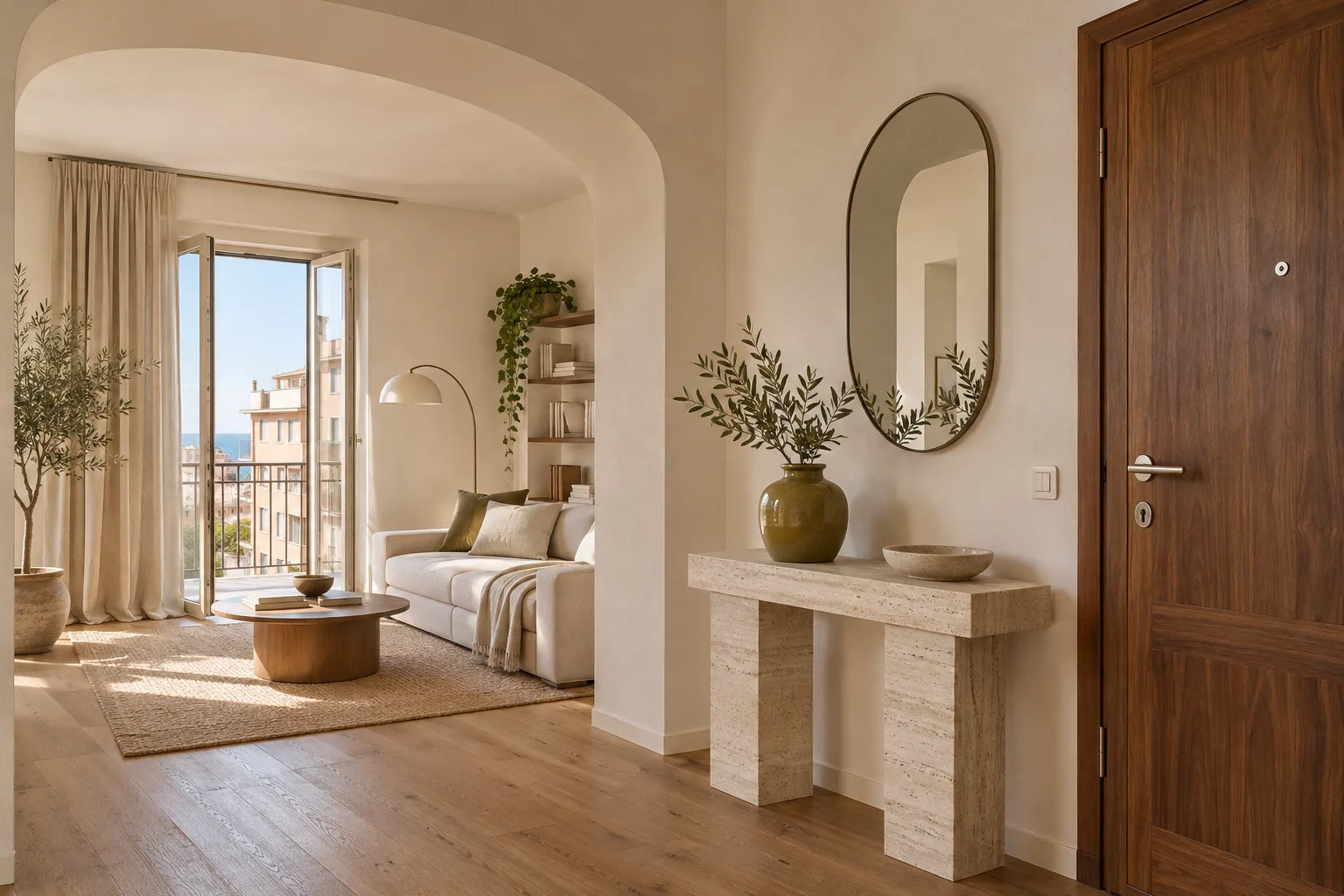
The route passed the living room door
In this illustrative Torrevecchia Teatina case, the house had been renovated about fifteen years earlier. Bringing in a damp towel or wet plant pot from the terrace meant crossing an area in front of the living room on the way to the laundry. Marks appeared mainly where someone set the load down to close the door. The first plan renewed the finish along the passage. At the survey, the sequence was repeated with an empty pot and a rolled towel. The person crossed the same stretch twice. They set the load down, then went back to close the door. Both movements went onto the drawing.
Measuring space beside the utility entrance
An area near the terrace door could hold a landing surface for the load. The passage, handle and area used to open the door were measured. The first drawing added a narrow surface immediately inside. It cleared the door swing but left little room to turn with a towel in hand. The coordinator also asked for a trial on the way to the laundry sink with the living room door open. The drawing recorded the distance between the landing edge and where someone stood to close the door. The finish was chosen once it was clear which surfaces would still catch drips during that movement.
A mock-up moved the landing surface to the other side
The first temporary surface held the pot, but the rolled towel projected into the handle area. A deeper mock-up went on the other side of the opening, beyond the door swing. The free hand reached the handle and the route continued to the sink without doubling back. The area to make good on the wall changed and the space in front of the living room stayed clear. Before approving the mock-up, the pot was carried with both hands. It could be set down before closing the door, then picked up without going past the living room entrance.
Handover repeated the whole route
The landing area was prepared before the wall edge was finished. Its finished dimensions were checked while both doors moved, and the stretch beneath the surface stayed reachable for cleaning. At handover, the pot and towel came in from the terrace. The load was put down, the door closed and the route to the laundry checked. A cloth reached around the edge and behind the landing surface without moving anything else. The record showed the chosen surface and the area to leave clear, with a photo of the open door and one of the route viewed from the laundry sink.
Testing the route before choosing a finish
Walk the route with the bulkiest wet item and find where to set it down while closing the door. Mark where the load changes hands or passes close to a wall. Compare two mock-ups with the living room door open before agreeing on the landing surface. At handover, repeat the route and make sure a cloth can reach behind and beneath the surface. Keep the pictures and the care instructions for the finish. If you change the type of pot or add a cabinet, repeat the trial with both hands occupied before fixing anything else near the door.
Torrevecchia Teatina · CH · Abruzzo · Distance and service-area coverage ↗
How we prepare the guides: sources and illustrative scenarios