Casa Pescara
Home renovation · 3 min · Published
Renovating an entry in Pianella with a place to put groceries
An illustrative home renovation in which a shelf and hooks moved after a trial with shopping bags and keys.
Illustrative scenario · A narrative example of work stages and final checks; it does not document an actual completed project.
The shopping bags passed the edge of the shelf
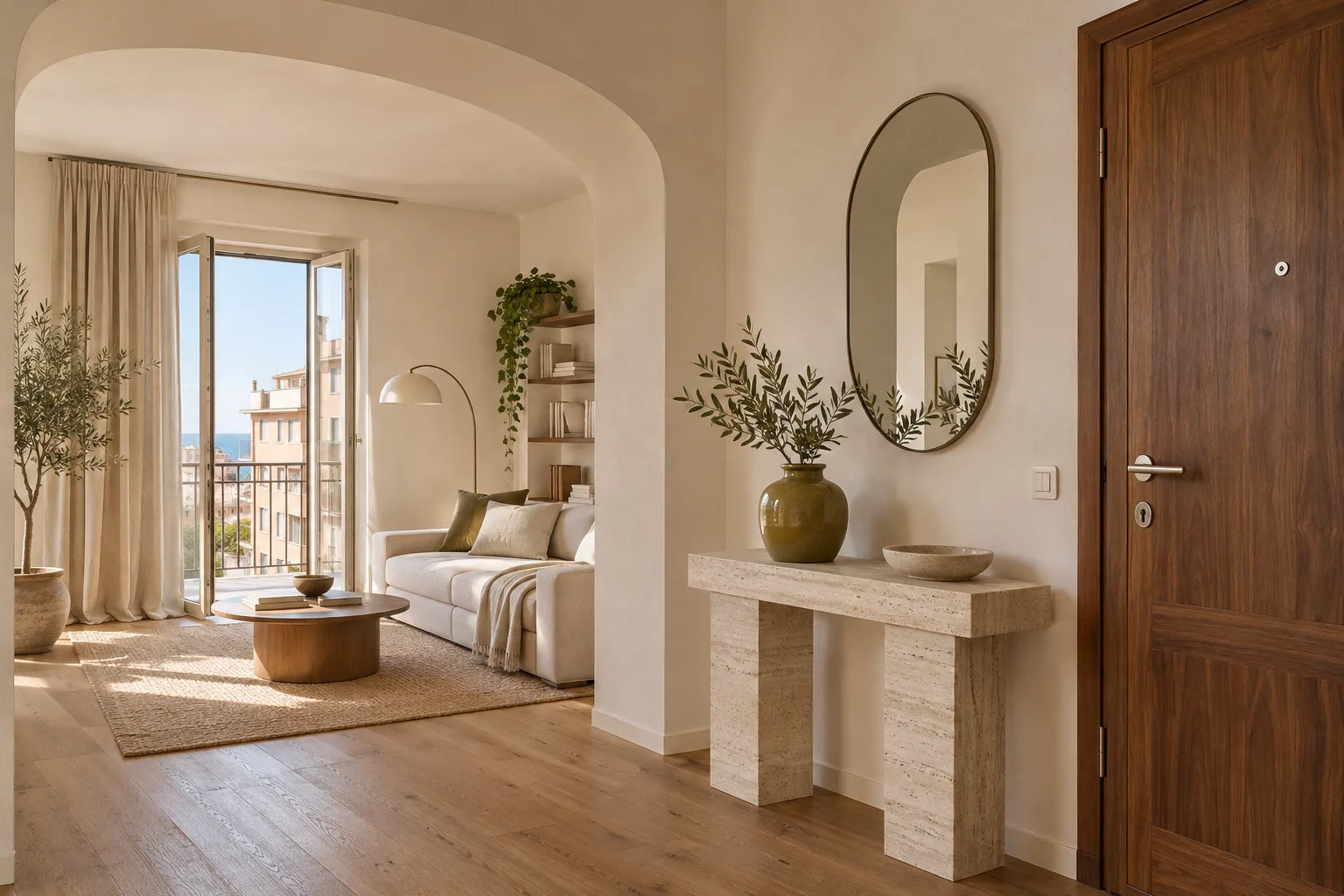
In this illustrative case in Pianella, a projecting shelf stood on the side where people came in carrying groceries. During the survey, a full bag caught its edge while someone searched for their keys. Once inside, closing the door meant putting the bag on the floor or twisting it sideways. The renovation included repairing the wall, which already showed marks from previous knocks. Before picking a position for the replacement shelf, the team watched the whole sequence from opening the door to putting the bags down. They also measured the wall with the door open and a coat hanging from the closest hook.
Keys came before coats
The keys were put down as soon as the door closed, while the coat only went onto its hook after the groceries reached the kitchen. The first drawing put keys, coats and bags into a single unit. During the initial trial, a bag handle caught the sleeve of the coat. The spot for keys was separated from the other landing areas and moved to the side of the free hand. Two heights were tested with the bulkiest set of keys, which included a gate remote. The lower one made the container visible on entering without leaning over the bag or having to put the coat down first.
A tall bag changed the working depth
For the bags, the mock-up was almost as wide as the space between the door and the wall. It took two short bags, but a bag containing a tall pack interfered with the hand on the door handle. The landing surface was redrawn on the stretch beyond the door swing, leaving enough room at the front to take hold of the handles. A trial with an empty bag had produced a more favourable result. For confirmation, both bags were filled and the trip was repeated with the door held in the position where it normally stopped when someone walked in.
Wall repairs followed the new layout
After the clearances were agreed, the old shelf and the hooks due to move were taken down. The areas that needed repairs were marked separately from those that had to remain accessible for the new fittings. The finishes were checked from the entrance, with the door in the position that revealed the old holes. The hooks went back on a stretch of wall that could be reached after putting the bags down. The landing surface was installed after its edges against the wall were checked. Before returning everything to the entrance, the trip was repeated with a single coat to establish which hook would serve everyday use.
The handover trial began outside
At handover, someone entered from outside with full bags and keys in hand. They closed the door, put the keys down and continued toward the kitchen with both bags. They came back and repeated the movement to hang the coat. The door then opened all the way without touching the bag handles or the fabric. Picking up the keys was also checked with the room dark and only the entry light on. The final note identified the surface for the shopping bags and the everyday hook, so someone who had not followed the work could still recognise the layout that had been tested.
Pianella · PE · Abruzzo · Distance and service-area coverage ↗
How we prepare the guides: sources and illustrative scenarios