Casa Pescara
Bathroom · 3 min · Published
A shower shelf in a Cappelle sul Tavo bathroom renovation
An illustrative case about placing a shower shelf out of the spray, choosing a support and checking it before finishing the wall.
Illustrative scenario · A narrative example of work stages and final checks; it does not document an actual completed project.
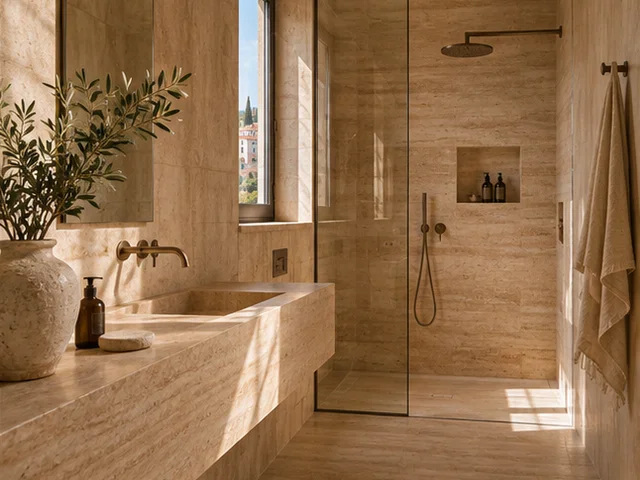
A small object on a complicated wall
In this illustrative case, the Cappelle sul Tavo bathroom had been renovated about fifteen years earlier. Shampoo and soap sat in a basket hung from the shower rail. The basket swung when the head was moved and put bottles directly under the spray. The proposed wall finish included a fixed shelf on the opposite side. That wall contained services missing from the plan handed over with the old bathroom. During the visit, the position of the mixer, the movement of the hose and the usual position of a hand opening the glass door were recorded. The shelf needed to stay clear of those movements.
Trying the position with real objects
Two templates represented shelves of different depths. The larger one held all the bottles but extended into the space where someone turned to take a towel. A narrower shelf worked for everyday items, with spare products kept in the cabinet outside. The trial considered tall bottles and containers with pumps because they required different movements. The drawing marked the path of the hose and the spot where someone could clean the shelf without moving the glass. An initial height was dropped after simulating the movement needed to grasp the heaviest bottle. The revised position remained within reach when the shower head was lowered.
Choosing the support before finishing
During removal, the installer surveyed the wall behind the tiles and the plumber identified the exposed service routes. The shelf detail was agreed with the person responsible for the shower waterproofing system before specifying any fixing. One support point in the first drawing fell near a pipe. The tiler transferred the dimensions to the open wall and the designer moved the detail to an area suited to the selected system. The shelf had a rounded edge and a finish compatible with the intended cleaning. Its support went onto the drawing together with references for the layers that would be concealed.
A second trial with the glass in place
The shelf was first checked with a tile sample before installation was complete, and the trial was repeated with the glass installed. The door cleared the edge, but a tall bottle made its own pump difficult to operate in the available space. That bottle went into the outside cabinet and the shelf was tested with the items intended to stay. The hose could return to its resting position without touching the support. During a water test, the shelf surface and the area behind the bottles were also observed. The technician recorded the areas checked before the cleaning and maintenance instructions were handed over.
Planning the installation of a similar accessory
Bring the bottles you use most and photographs of the wall to the visit so the installer can check clearance and position. The handover sheet recorded the order of decisions. The team first tried the reach and listed the intended contents, then surveyed service routes, agreed the detail with the tiler and checked the assembly with the glass fitted. A photograph showed the support before the wall finish covered it. The instructions listed materials compatible with the surface and the space needed to clean the back of the shelf. The household also kept the references for the shelf and wall system. Any future accessory would need to be checked against those positions before another part of the wall was used for support.
Cappelle sul Tavo · PE · Abruzzo · Distance and service-area coverage ↗
How we prepare the guides: sources and illustrative scenarios